Evident LogoOlympus Logo

Objective Lenses

顕微鏡の対物レンズには、アポクロマート、セミアポクロマート、アクロマートなど、さまざまな種類があります。当社では、各種ライフサイエンスアプリケーションや観察法に最適な対物レンズを豊富にとりそろえています。以下のラインアップから、お客様のニーズに合った対物レンズをお探しください。対物レンズセレクターを使って、選択肢を比較したり、用途に最適な対物レンズを見つることもできます。

お問い合わせ 

顕微鏡対物レンズ

Extended Apochromat Objectives

UPLXAPO

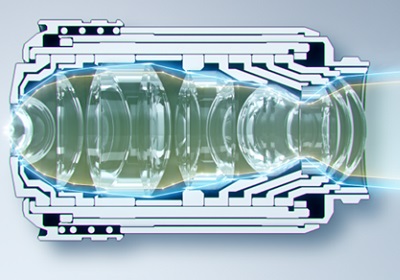
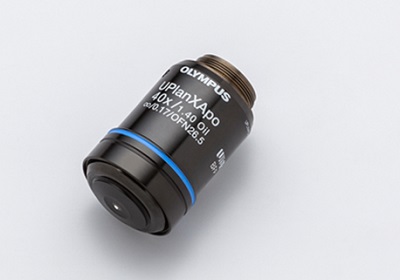
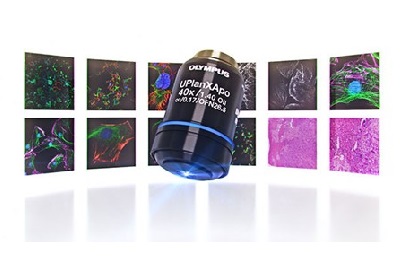
These extended apochromat objectives offers a high numerical aperture (NA), wide homogenous image flatness, and 400 nm to 1000 nm chromatic aberration compensation. They enable high-resolution, bright image capture for a range of applications, including brightfield, fluorescence, and confocal super resolution microscopy. 

  • High NA, wide homogeneous image flatness, and wide range chromatic aberration compensation from 400 nm to 1000 nm
  • Highly reliable precision image for wide applications from bright field/fluorescence microscopy to confocal /super resolution microscopy
Extended Apochromat Objectives for Phase Contrast

UPLXAPO-PH

These extended apochromat objectives offer high NA, wide homogenous image flatness, 400 nm to 1000 nm chromatic aberration compensation, and the ability to observe phase contrast. Use them to observe transparent and colorless specimens such as live cells, biological tissues, and microorganisms.

  • High NA, wide homogeneous image flatness, and wide range chromatic aberration compensation from 400 nm to 1000 nm
  • Reliable and precision imaging when fluorescence or confocal imaging is combined with phase contrast
Super-Corrected Apochromat Objectives

PLAPON-SC

This super-corrected apochromat objective corrects a broad range of color aberrations to provide images that capture fluorescence in the proper location. Delivering a high degree of correction for lateral and axial chromatic aberration in 2D and 3D images, it offers reliability and accuracy for colocalization analysis.

  • Chromatic aberration is compensated to the utmost limit
  • Every single objective is delivered with measured chromatic aberration data and less than 0.1 µm on-axis chromatic aberration between 405 nm and 650 nm
  • Suitable for strict colocalization analysis or super resolution
Apochromat Objectives for Super Resolution/TIRF Imaging

APON-TIRF/UAPON-TIRF/UPLAPO-HR

Offering our highest numerical aperture values, these apochromat objectives are optimized for high-contrast TIRF and super resolution imaging. Achieve wide flatness with the UPLAPO-HR objectives’ high NA, enabling  real-time super resolution imaging of live cells and micro-organelles.

  • High NA to create an evanescent wave field for high contrast TIRF images or super resolution
  • HR series are the world first* Plan Apochromat objectives with NA1.5 which achieve wide flatness

* As of November 2018. According to Olympus research.

Semi-Apochromat Water Dipping Objectives for Electrophysiology

UMPLFLN-W/LUMPLFLN-W/XLUMPLFLN-W/LUMFLN-W

These semi-apochromat long-working distance water-dipping objectives for electrophysiology deliver flat images for DIC and fluorescence imaging from the visible range to the near-infrared. Their high NA and low magnification enables bright, precise macro/micro fluorescence imaging for samples such as brain tissue. 

  • Long working distance, water dipping objectives display flat images from high transmission factors up to the near-infrared region of the spectrum
  • Excellent DIC and fluorescence from the visible range to infrared and are suitable for fluorescence imaging of brain tissue
  • High NA with low magnification of XLUMPLFLN20XW enables bright and precise image from macro to micro
Super Apochromat objectives

UPLSAPO

  • Provides full compensation for both spherical and chromatic aberrations from the visible to the near-infrared region
  • Acquires bright and high-resolution brightfield/fluorescence microscopy images in broad application range in the clinical field
Super Apochromat Objectives

UPLSAPO-S/UPLSAPO-W

These super apochromat objectives provide spherical and chromatic aberration compensation and high transmission from the visible to the near infrared. Using silicone oil or water immersion media, which have refractive indexes closely matching that of live cells, they achieve high-resolution imaging deep in living tissue. 

  • Compensate for both spherical and chromatic aberrations and high transmission from the visible to the near-infrared region
  • Silicone oil or water immersion media help achieve high-resolution imaging deep in living tissue and reduce spherical aberration as their refractive indexes closely match that of live cells
Apochromat Objectives for Macro Observation

PLAPON

For high-performance macro-observation, these apochromat objectives provide sharp, clear, flat images without color shift, achieving high transmission up to the near-infrared region of the spectrum. They perform well for fluorescence, brightfield, and Nomarksi DIC observations. 

  • Displays flat images from high transmission factors up to the near-infrared region of the spectrum
  • Acquires sharp, clear images, without color shift, in fluorescence, brightfield and Nomarski DIC observations
  • Offers an unbeatable solution for every kind of digital imaging need for quality and performance
Semi-Apochromat Objectives

UPLFLN/PLFLN

This semi-apochromat objective series provides flat images and high transmission up to the near-infrared region of the spectrum. Acquiring sharp, clear images without color shift, they offer the desired quality and performance for fluorescence, brightfield, and Nomarksi DIC observations.

  • Displays flat images from high transmission factors up to the near-infrared region of the spectrum
  • Acquires sharp, clear images, without color shift, in fluorescence, brightfield and Nomarski DIC observations
  • Offers an unbeatable solution for every kind of digital imaging need for quality and performance
Semi-Apochromat Objectives for Polarization

UPLFLN-P

Optimized for polarized light microscopy, these semi-apochromat objectives provide flat images with high transmission up to the near-infrared region of the spectrum. They are designed to minimize internal strain to meet the requirements of polarization, Nomarski DIC, brightfield, and fluorescence applications.

  • Displays flat images from high transmission factors up to the near-infrared region of the spectrum
  • Reduces internal strain to an absolute minimum
  • Best suited for polarizing, Nomarski DIC, brightfield and fluorescence microscopy
Semi-Apochromat Objectives for Cell Culture

UCPLFLN/LUCPLFLN

Enabling tissue culture observation through bottles and dishes, these universal semi-apochromat objectives feature a long working distance and high contrast and resolution. Providing flat images and high transmission up to the NIR region, they are well suited for brightfield, DIC, and fluorescence observation.

  • Provides long working distance, universal objectives with excellent contrast and resolution in brightfield, DIC and fluorescence observations
  • Displays flat images from high transmission factors up to the near-infrared region of the spectrum
  • Dedicated to tissue culture observations through bottles and dishes
Achromat Objectives

PLN/LPLN

Designed for clinical research and routine examination work in the laboratory, these achromat objectives provide the level of field flatness required for fluorescence, darkfield, and brightfield observation in transmitted light.  

  • Ensures superb field flatness with fluorescence, darkfield and brightfield observation in transmitted light
  • Suited for clinical laboratory and examination work
Achromat Objectives for Polarization

PLN-P/ACHN-P

For clinical research requiring polarized light microscopy and pathology training, these achromat objectives enable transmitted polarized light observation at an affordable cost.

  • Enables transmitted polarized light observations at an affordable cost
  • Suited for clinical inspection and student training
Semi-Apochromat Objectives for Phase Contrast

UPLFLN-PH

These semi-apochromat objectives enable phase contrast observation while providing a high level of resolution, contrast, and flatness for unstained specimens.

  • Especially effective in phase-contrast observations
  • Provides high S/N ratio, high resolution and contrast imaging
  • Displays flat images from high transmission factors up to the near-infrared region of the spectrum
Semi-Apochromat Objectives for Phase Contrast Observation of Cell Culture

UCPLFLN-PH/CPLFLN-PH/LUCPLFLN-PH

For phase contrast observation of cell cultures, these universal semi-apochromat objectives provide long working distances and flat images with high transmission up to the near-infrared region. They help you achieve clear images of culture specimens regardless of the thickness and material of the vessel.  

  • Offers long working distance, universal objectives for phase-contrast images
  • Displays flat images from high transmission factors up to the near-infrared region of the spectrum
  • Exclusively designed for culture specimens, regardless of the thickness and material of the vessel
Semi-Apochromat Objectives for Relief Contrast

CPLFLN-RC/LUCPLFLN-RC

For relief contrast observation of living cells, including oocytes, in plastic vessels, our universal semi-apochromat objectives feature a long working distance. These also provide high image flatness and high transmission up to the near-infrared region. 

  • Provides long working distance, universal objectives for Relief Contrast observations
  • Displays flat images from high transmission factors up to the near-infrared region of the spectrum
  • Designed for the observation of living cells, including oocytes,in plastic vessels
Achromat Objectives for Phase Contrast

PLN-PH

Designed for clinical research and routine examination in labs using phase contrast illumination, these achromat objectives offer excellent field flatness.

  • Ensures superb field flatness with phase-contrast observation in transmitted light
Achromat Objectives for Phase Contrast Observation of Cell Culture

CPLN-PH/LCACHN-PH

Designed for phase contrast observation of cell cultures in transmitted light, these achromat objectives combine field flatness and easy focusing with cost efficiency. They are well suited for routine microscopy demands.

  • Ensures superb field flatness with phase-contrast observation in transmitted light
  • Combines easy focusing with excellent cost efficiency
  • Especially suited for routine inspections involving many specimens
Acromat Objectives for Relief Contrast

CPLN-RC/LCACHN-RC

For relief contrast observation of living cells, including oocytes, in plastic vessels using transmitted light, these achromat objectives provide excellent field flatness.

  • Ensures superb field flatness with Relief Contrast observation in transmitted light
  • Designed for the observation of living cells, including oocytes, in plastic vessels
Achromat Objectives for Integrated Phase Contrast Observation of Cell Culture

UPLFLN-IPC/CACHN-IPC/LCACHN-IPC

These semi-apochromat and achromat objectives are designed for integrated phase contrast observation of cell cultures. They are used in combination with a pre-centered phase contrast slider (CKX3-SLP), eliminating centering adjustments when changing the objective magnification.

  • Used in combination with the pre-centered phase contrast slider, CKX3-SLP
  • Eliminates the need for centering adjustment when changing the objective magnification in phase contrast observation
Apochromat Objectives for Fura-2 Imaging

UAPON-340

These apochromat objectives are dedicated to Fura-2 imaging that features high transmission of 340 nm wavelength light, which works well for calcium imaging with Fura-2 fluorescent dye. They perform well for fluorescence imaging through UV excitation.

  • Features high transmission of 340nm wavelength light
  • Ensures maximum performance influorescence microscopes through UV excitation
No Cover Glass Objectives

MPLFLN/MPLAPON

For use without a coverslip or cover glass, these objectives prevent image deterioration even under high magnification, making them well suited for blood smear specimens. They also feature extended flatness and high chromatic aberration correction. 

  • Especially designed for use without a cover slip
  • Ideal for blood smear specimens
Multiphoton Excitation Dedicated Objectives

XLPLN-MP/XLSLPLN-MP

Optimized for multiphoton excitation imaging, these objectives achieve high-resolution 3D imaging through fluorescence detection at a focal point of a large field of view. They enable high-precision imaging of biological specimens to a depth of up to 8 mm for in vivo and transparent samples.

  • Optimized for multiphoton imaging
  • Achieves high resolution 3D imaging through detection of fluorescence from the focal point of a big field of view
Semi-Apochromat Objectives for Macro Fluorescence

XLFLUOR-340

Designed for low-magnification, macro fluorescence observation, this semi-apochromat objective offers a long working distance, a high NA, and high transmission of 340 nm wavelength light.

  • Long working distance objectives specially designed for low magnification fluorescence observation featuring high transmission of 340 nm wavelength light and high NA

 was successfully added to your bookmarks

View Bookmarks   Close

Maximum Compare Limit of 5 Items

Please adjust your selection to be no more than 5 items to compare at once

対物レンズのよくあるご質問

接眼レンズと対物レンズの違いは何ですか。

接眼レンズは鏡筒の最上部にあり、観察時にはそこに目を合わせます。一方、対物レンズはサンプルの近くにあります。一般に接眼レンズの倍率は低いですが、対物レンズと組み合わせて使うと大きな拡大倍率が得られます。対物レンズでとらえた拡大像を、接眼レンズを使って拡大します。接眼レンズは単に倍率に合わせて焦点を合わせるのに対して、対物レンズは顕微鏡像全体の品質や鮮明さの制御など他の機能にも影響します。

顕微鏡にはいくつ対物レンズを使用しますか。

多くの顕微鏡には複数の対物レンズが装着され、レボルバーを回してさまざまな倍率でサンプルを観察できます。通常、1台の顕微鏡に1.25X~150Xの対物レンズが複数装着されます。

顕微鏡における対物レンズの働きはどのようなものですか。

対物レンズは1次結像を担っており、作られる像の品質を決定するほか、総合倍率と分解能を制御します。設計と品質はさまざまなです。

詳細は、対物レンズの構造をご覧ください。

対物レンズはどのようにクリーニングしますか。

顕微鏡の対物レンズをクリーニングするには、まず対物レンズを取り外し、レンズを上に向けて平らな場所に置きます。ブロワーを使って、レンズを触らずに粒子を取り除きます。次に、レンズペーパーを細い三角形に折ります。ペーパーの先端を少量のクリーナーで湿らせてレンズの上に乗せます。レンズの中心から端まで、渦巻き状に回転させて拭きます。接眼レンズかルーペで拭き残しがないかチェックします。必要に応じて、レンズがきれいになるまで新しいレンズペーパーで拭く作業を繰り返します。重要:レンズは乾拭きしないでください。また、研磨剤、リント布、ティッシュペーパー、ラボ用ティッシュの使用は避けてください。レンズ表面にキズが付く恐れがあります。レンズクリーニングの詳細は、ブログ対物レンズのイマージョンオイルをきれいに落とす6つの秘訣をご覧ください。

顕微鏡対物レンズの資料

顕微鏡対物レンズ入門

対物レンズの機能、構造、その他詳細について、対物レンズ入門をご覧ください。

詳細はこちら

適切な顕微鏡対物レンズ選択方法

自分の用途に合う対物レンズがどれなのかよく分からなくありませんか。正しい対物レンズの選択ガイドを使って、選択肢を検討しましょう。

詳細はこちら

革新的な光学性能を備えたX Line™対物レンズ

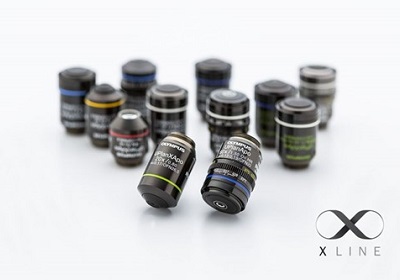
高度な製造技術により革新的な光学性能を実現するX Line対物レンズの詳細をご覧ください。

詳細はこちら

「波面収差コントロール」が対物レンズの性能安定化に欠かせない理由

波面収差コントロールを備えた対物レンズが、優れた顕微鏡設計にどのように必要なのかについて探りましょう。

詳細はこちら

このページはお住まいの地域ではご覧いただくことはできません。

Contact the OEM Team 

Need assistance?

Get in Touch

Sorry, this page is not available in your country