Evident LogoOlympus Logo

The University of Texas at Dallas

The Olympus Discovery Center Program
 

The University of Texas at Dallas (UT Dallas) is an innovative institution in the heart of North Texas. Since its founding in 1969, UT Dallas continues its original commitment to providing some of the state’s best science and engineering programs.

The wealth of learning resources available to UT Dallas students is the result of a concentrated effort to attract the best faculty and students. Joining the faculty’s Nobel laureate and six members of the National Academies are 550 tenured and tenure-track professors. In addition, UT Dallas is home to numerous centers, labs, and institutes that facilitate research and opportunities for hands-on learning.

The Olympus Discovery Center Program

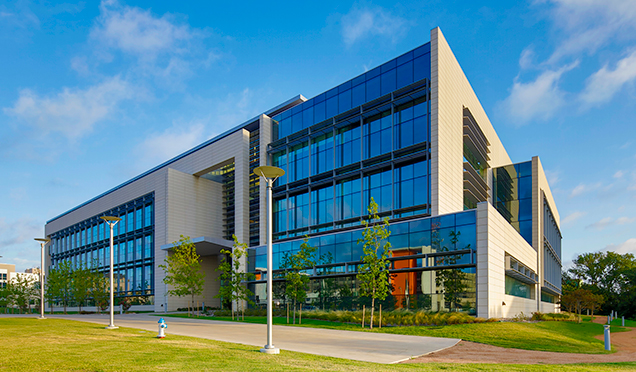
Bioengineering and Sciences Building

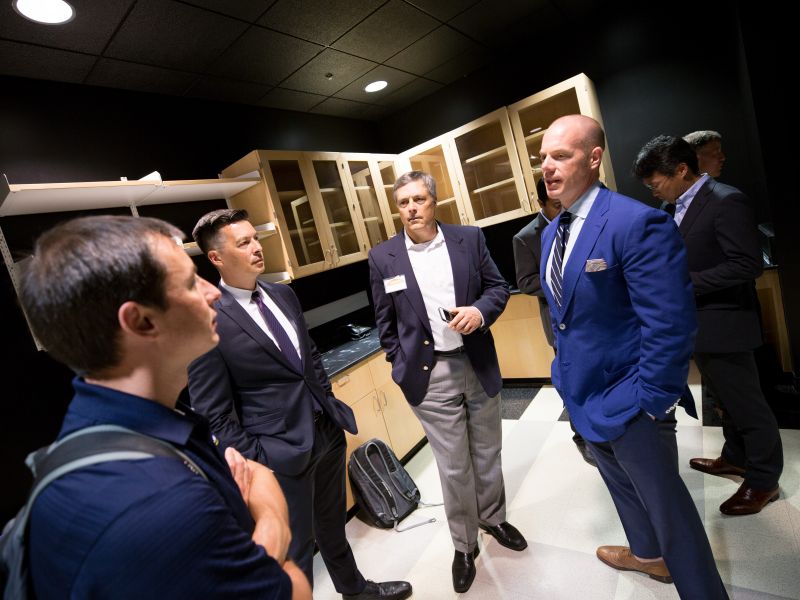
The Bioengineering and Sciences Building at UT Dallas is the setting for world-class labs that support leading biomedical engineering research. The 220,000-square-foot structure is the University's largest academic building. It houses programs in bioengineering and neuroscience, as well as research space for related programs in biology and chemistry.

The recently opened facility provides an ideal setting for interdisciplinary research, with labs and professors from multiple disciplines housed near one another. UT Dallas hopes the state-of-the-art lab space, with the latest tools and equipment, will accelerate the University’s research prowess and its recruitment of even more top faculty and students from around the world.

The Work at The University of Texas at Dallas

The work being done at UT Dallas’ Bioengineering and Sciences Building represents important, collaborative research in bioengineering, neuroscience, biology, and chemistry.

An example of that collaboration is a project involving professors from the School of Behavioral and Brain Sciences, the Erik Jonsson School of Engineering and Computer Science, and the School of Natural Sciences and Mathematics. Dr. Ted Price, a neuroscience associate professor, is partnering with Dr. Zak Campbell, a molecular biology and biochemistry assistant professor, and Dr. Joe Pancrazio, associate provost and bioengineering professor, in a project that uses innovative measurements of neural activity for screening novel pain therapeutics.


Faculty

Visit profile

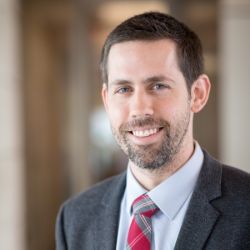
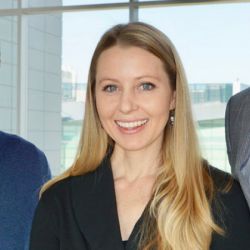
Dr. Seth Hays

A pesquisa do Dr. Hays se concentra no aumento da neuroplasticidade, ou a capacidade do cérebro de mudar, para tratar doenças neurológicas. Como parte de sua pesquisa, o Dr. Hays está testando a estimulação do nervo vago para melhorar a recuperação em modelos de derrame hemorrágico e isquêmico com fatores complicantes observados na população clínica de pacientes com derrame.

Visitar o perfil

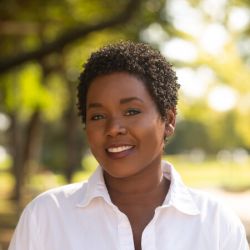
Dr.ª Nikki Delk

A Dr.ª Delk pesquisa tipos de câncer atualmente sem cura após a metástase para os ossos, especialmente os cânceres de próstata e de mama. A Dr.ª Delk está investigando a autofagia e seu papel na resistência ao tratamento contra o câncer. Ela está trabalhando para identificar as vias de sinalização que regulam a autofagia em células cancerosas e no uso dessas vias como alvos terapêuticos.

Visitar o perfil

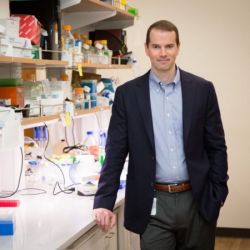
Dr. Greg Dussor

A pesquisa do Dr. Greg Dussor tem como foco a descoberta de mecanismos patológicos e alvos terapêuticos relacionados à dor de cabeça da enxaqueca. Como o mecanismo que provavelmente contribui para a dor da enxaqueca é a ativação da sinalização nociceptiva periférica das meninges, os experimentos no laboratório de Dussor vêm se concentrando na identificação de mecanismos celulares de ativação/sensibilização aferente dural, assim como na compreensão da plasticidade nos terminais centrais desses neurônios.

Visitar o perfil

Dr.ª Heather Hayenga

A Dr.ª é a chefe de pesquisas no Laboratório de Mecanobiologia Vascular, onde ela e sua equipe conduzem pesquisa para entender e prevenir a progressão de doenças cardiovasculares usando modelos experimentais e computacionais.

Visitar o perfil

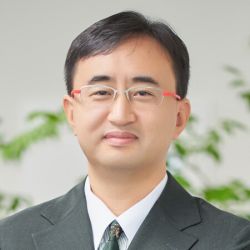
Dr. Jay Kim

A pesquisa do Dr. Kim tem como foco a compreensão do papel da resposta hipóxica na regulação da remodelagem microambiental em tumores e na reprogramação metabólica em cânceres. Ele também trabalha para entender o papel das células estromáticas, inclusive fibroblastos, adipócitos e células inflamatórias, no avanço do câncer.

Visitar o perfil

Dr. Ted Price

A pesquisa do Dr. Price envolve a compreensão de como a plasticidade neuronal afeta a maneira como o cérebro recebe informações nociceptivas do sistema sensorial e a relação disso com a dor crônica em pacientes humanos. Ele descobriu vários novos alvos que regulam a excitabilidade de neurônios sensoriais após uma lesão e que mediam a plasticidade no sistema nervoso central que fazem a dor virar crônica.

Visitar o perfil

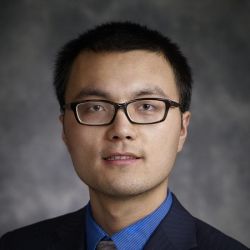
Dr. Zhenpeng Qin

Dr. Qin e sua equipe pesquisam a interface bio/nano e traduzem suas descobertas para a área de aplicações biomédicas. Ele e sua equipe estão focados nos fundamentos da termoplasmônica e seus efeitos na interface entre sistemas biológicos e nanomateriais.


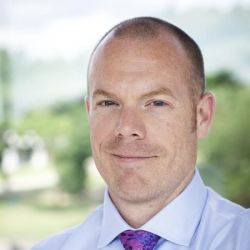
Dr. Joseph Pancrazio

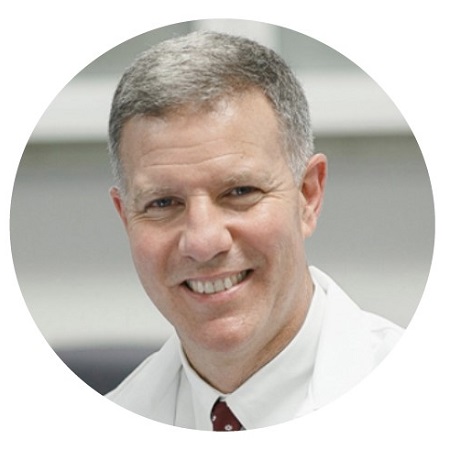
“Through our partnership with Evident, our cutting-edge imaging facility will enable our growing faculty to pursue innovative biological and molecular science. Furthermore, the facility will attract exceptional faculty candidates and students to our university community."―Dr. Joseph Pancrazio, Associate Provost and Professor of Bioengineering at UT Dallas


In the Spotlight

.
,

Learn More

Read Blog


Systems at University of Dallas Texas

FLUOVIEW FV3000RS laser scanning confocal system

FV3000

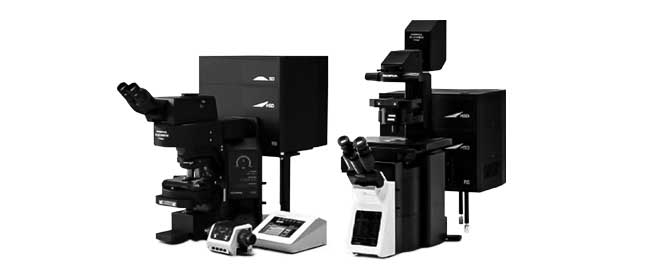
Enabling the observation and recording of fast phenomena and live physiological events, this hybrid laser scanning unit uses a galvanometer scanner for precision scanning and a resonant scanner for high-speed imaging with a with a large field of view.

Learn More

FLUOVIEW FVMPE-RS twin multiphoton system

FVMPE-RS

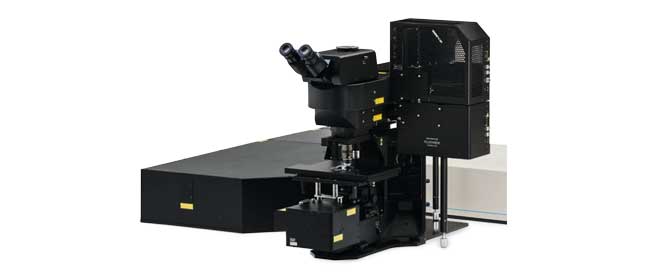
Achieving high-sensitivity, high-resolution imaging deep into biological specimens, the FVMPE-RS twin multiphoton laser microscope reveals how cells function and interact within living tissue.

Learn More

SD-OSR spinning disk confocal microscope system with Olympus Super Resolution

SD-OSR

Capturing subtle high-frequency components not visible in conventional spinning disk microscopy, the SD-OSR system’s high-quality optics, Yokogawa W1 spinning disk technology, and Airy disk oversampling achieve improved signal, reduced noise, and super resolution imaging down to 120 nm.

Learn More

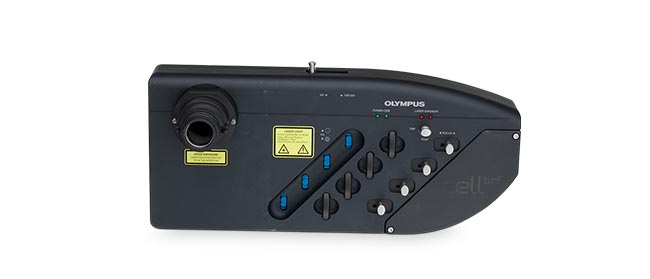
cellTIRF simultaneous 4-color TIRF module with IX83 inverted microscope frame

cellTIRF simultaneous 4-color TIRF module with IX83 inverted microscope frame

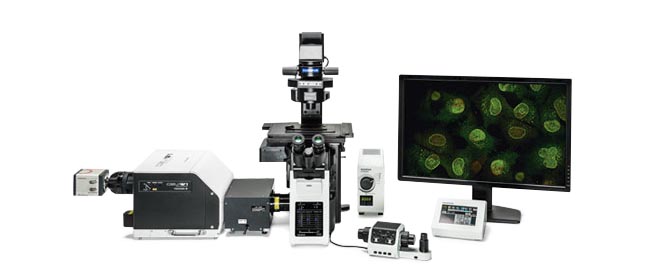
Satisfying a wide range of experiment protocols, the fully motorized IX83 microscope with cellTIRF module enables advanced imaging methods including total internal reflection fluorescence (TIRF), single molecule localization microscopy (SMLM), and fluorescence recovery after photobleaching (FRAP).

Learn More

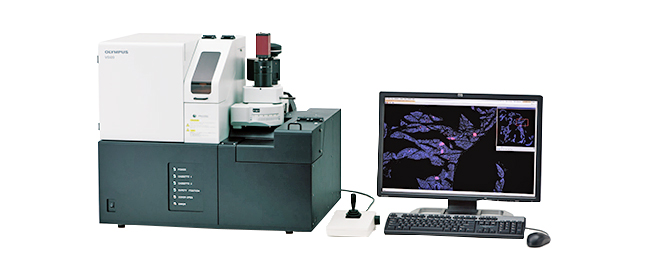
VS120 virtual slide scanner with 100-slide loader

VS120

Capturing high-resolution brightfield or fluorescence images of slides for quantitative analysis, the VS120 system with 100-slide loader is a dependable and robust workhorse designed for high-throughput research and pathology.

Learn More

Sorry, this page is not
available in your country.

Sorry, this page is not available in your country